Next week, Neil Patrick Harris, one of the greatest entertainers of our time, will release his very first autobiography. And it’s about damn time. From Doogie to NPH to Barney to Hedwig, he’s lived a life enough to span 10 million lifetimes, and that’s exactly what he’s writing about in his new book. However it’s not just any kind of memoir, it’s a Choose Your Own Adventure book. Yes, that’s right, akin to those from your childhood. Because he’s just that awesome.
I only read a few Choose Your Own Adventure books growing up, but as an adult, you bet I’ll be reading this particular one. Since I didn’t read as many CYOA books as other kids, I decided to do some research on them, and what I found was that a lot of them had interesting titles. And by interesting I mean a lot of them had exclamation points at the end of them! I don’t know, I don’t see many books these days with such enthusiastic punctuation marks, but this seemed odd to me. It was like a lot of them were those horrible science fiction or horror films from the past. In fact, to put you to the test, below are a mix of both CYOA books and horror films from the 1980s, so it’s up to you to figure out which one is which. A choose your own adventure/fate in winning, of sorts! Enjoy!
Don’t Answer the Phone!
Plot: “A deeply disturbed photographer and Vietnam veteran terrorizes Los Angeles by going around strangling lingerie-clad young women in their homes while also taunting a young psychologist by calling her on a radio call-in show to describe his sexual hang-ups and misogynistic ways.”
Choose Your Own Adventure Book or 1980s Horror Film?!
.
.
.
.
.
.
Kidnapped!
“When Allen visits his friend Jason after school for the first time, he’s surprised to find that he is extremely wealthy and lives in a mansion. During a race in Jason’s go-karts down the driveway, a stranger suddenly approaches and gestures for them to get in his car. The two notices a security guard lies wounded on the ground, and soon realize they’re about to be kidnapped.”
Choose Your Own Adventure Book or 1980s Horror Film?!
.
.
.
.
.
.
Typhoon!
“After a 40-year career on the high seas, Captain Michael Polanski sets out for his final trek, but runs into some trouble when his ship is assailed not only by pirates but a deadly typhoon.”
Choose Your Own Adventure Book or 1980s Horror Film?!
.
.
.
.
.
.
Maniac!
“A psychotic man, troubled by his childhood abuse, loose in NYC, kills young women and takes their scalps as trophies. Will he find the perfect woman in photographer Anna, and end his killing spree?”
Choose Your Own Adventure Book or 1980s Horror Film?!
.
.
.
.
.
.
Possessed!
“A teen’s parents go out of town for the weekend, leaving her with the entire house to herself. She has a big blowout bash but after everyone leaves, two sinister spirits from past lives take over her body. In the process she learns of a family curse that has wrought havoc through the centuries.”
Choose Your Own Adventure Book or 1980s Horror Film?!
.
.
.
.
.
.
Help! You’re Shrinking
“A chemist stays up late in the lab working on a secret experiment, but a strange bottle mysteriously shows up that he’s never seen before. While he tries to figure out what it is, the blue liquid splashed on his arm and suddenly he shrinks to the size of a blade of grass.”
Choose Your Own Adventure Book or 1980s Horror Film?!
.
.
.
.
.
.
Beware! Children at Play
“After several children have gone missing, a writer and a cop decide to get to the bottom of the problem once and for all. As they find more and more leads they discover that their children are being brainwashed into zombified cannibal killers by a disturbed teen.”
Choose Your Own Adventure Book or 1980s Horror Film?!
.
.
.
.
.
.
Eaten Alive!
“A young woman teams up with an adventurer to find her missing sister in the jungles of New Guinea and they stumble upon a religious cult led by a deranged preacher whom has located his commune in an area inhabited by cannibals.”
Choose Your Own Adventure Book or 1980s Horror Film?!
.
.
.
.
.
.
Stampede!
“Sam Kinnard is spending his last summer before his senior year of college at his uncle’s ranch in Utah, going on cattle roundups and breaking young mustangs. But when a number of cows turn evil, Sam has to fight for his life against the angry bulls.”
Choose Your Own Adventure Book or 1980s Horror Film?!
It’s Banned Books Week – the time every year when the academic and bookworm communities team up and tell meddlesome parent associations that they can suck it. And of course, they can and should: banning books is not cool. It usually happens because parents pressure schools and libraries to get rid of things they don’t want their kids to see. That would be fine if it was because these books were truly awful, like A Child’s Guide To Excluding Other Religions or Racism 4 Kidz. But that’s usually not the case.
Here’s the thing, though. If books can be banned simply because folks don’t want their kids exposed to the greater world, I think it’s only fair that the rest of us should get to arbitrarily have books banned too – because we hated them. I was in the AP/Honors track in high school, and in our particular school that meant that just about all we read were “the classics.” Now, don’t get me wrong, those dead white men can write. But some of those books were so dull and dusty that – even though I can see their value from an educational perspective – I wouldn’t mind banning them … because I hated them. Welcome to a very special edition of C+S Book Club, in which we become an anti-book club.
Heart Of Darkness by Joseph Conrad
In this book, we high school juniors learned about Africa from the perspective that really matters — this one white guy who is dead (see what I mean?). I couldn’t even get through the Wikipedia entry on this to refresh my memory, because even that was too boring. But the point is, a bunch of European dudes went through the Congo River on a boat getting obsessed with each other. There were definitely heads on sticks and some kind of a “native” rebellion and a melodramatic death scene. YAWN.
The Once And Future King by T.H. White
This was part of our summer reading before Freshman year of high school – and let me tell you, there’s no better way to stifle a lifelong love of reading than to assign seven books, including a 700-page Arthurian fantasy, to be read over the course of two months (read: the last two weeks before vacation ends), so that the kids don’t even have time to read of their own volition. But hey, high school is when you start to learn a lot about yourself — and this is when I learned that apparently, I hate Arthurian fantasy. The copy on the Barnes and Noble website says that this is a tale “of beasts who talk and men who fly, of wizardry and war.”
You know what else is that kind of tale of beasts who talk and men who fly, of wizardry and war? Harry Potter, which – fun fact! – did not ruin my fourteenth summer.
One Day In The Life Of Ivan Denisovich by Aleksandr Solzhenitsyn
It’s important for kids to understand that life in a Soviet gulag was tedious as hell, but even as a 15-year-old, I could have figured it out without having to read Ivan Denisovich’s boring day in prison develop in real time. When I discovered my study sheet from my AP English exam, I had subtitled this book something like “(more like 100 years in the life of me).”
I learned 1000% more about prison life by watching Orange Is The New Black, so maybe that can replace this 200-page snoozefest in the high school curriculum.
Gone With The Wind by Margaret Mitchell
Unfair grudge? Maybe. I’m shooting for reading 50 books this year, and Gone With The Wind, with its 1000-page count and twerpy protagonist, singlehandedly threw off my timeline. I know of people who read this in high school, but we didn’t because a white guy didn’t write it* (Margaret Mitchell is a white lady). Still, I figured I should see what the fuss was about.
I still don’t get it. People are obsessed with this book. I usually am able to view books as a product of their time, but GWTW really tested my patience. Rhett and Scarlett and the gang being racist? Totally unsurprising, and it would be unrealistic if they weren’t. But Mitchell portrayed all of the Black characters as simplistic, childlike dumb-dumbs who, even after emancipation, truly needed the guidance and protection of the good white people. Guys. The “mammy” is literally called Mammy. Mind you, this was written in 1936, not during the Civil War era.
There’s also a truly cringey “no means yes” rape scene (it’s totally fine, they were married and Scarlett wanted it UGH).
Finally, the book is only so long because the author takes about 200 pages to describe scenarios like “Scarlett goes to a barbeque and learns that this guy is engaged.”
If schools want to teach a civil-war era novel that also has inspired a feature film (because you can fill like a week of class days watching the movie), let’s go with Solomon Northrup’s 12 Years A Slave. Please.
* We did read To Kill A Mockingbird and Black Boy, so there’s two. Oh! And Wuthering Heights.
Catcher In The Rye by J.D. Salinger
Okay, I don’t really want this banned, and I didn’t hate it. But is there some way to short-list who gets to read it? I’m thinking about those earnest high school boys who think they’re deeper than everyone else, were born in the wrong era, and probably have Bob Dylan posters tacked up in their rooms. Give them one dose of Catcher and they become positively insufferable, because it reinforces their idea that they’re the only one who’s not a “phony” (except ol’ Phoebe, etc). Honestly, a great book, but teens who think they know everything don’t need more ammo. Let’s assign them Franny and Zooey instead, until they’re old enough to have a balanced perspective on the Holden Caulfield character.
F. Scott Fitzgerald and Ernest Hemingway, But Only For Some People
A few years ago I went on a huge Lost Generation reading kick, and I’m still so fascinated by the era they lived in, the style of writing, all of it. However, like Catcher In The Rye, some kids don’t have the perspective to read these critically. I don’t really want these on the banned list. These are exactly the kind of books I want kids reading, even if some kids don’t understand it at an adult level. It’s just that from my own high school and college days, I remember a lot of people reading these books and feeling so much admiration and awe for the very people who were being criticized in them. It’s like watching Mean Girls and coming away with the message “man, those Plastics really were the coolest kids out there, weren’t they?”
I guess I’m not saying that kids shouldn’t read Catcher In The Rye or books about high society written by the Lost Generation. I’m just saying we should teach them to read critically or, barring that, teach them to shut the heck up.
Great Expectations by Charles Dickens
Story time: we read this book in Honors English my Freshman year. I enjoyed it, but sometimes didn’t do awesome at the pop reading quizzes we had because I was more into binge reading on weekends than reading two chapters a night or whatever. When it got time to write the essay at the end of the unit, I killed it. A friend’s computer was broken, so I offered to type hers up too – not fixing the little mistakes I found because that would be dishonest and I was almost compulsively honorable at that stage of life.
When we got the graded papers back, I was ready to see the big fat A at the top of my page – and saw a 65%. WHAT. THE. HELL. 65% was a grade I’d only heard about before, from other people, unfortunate people whose lives weren’t like mine. My friend, whose paper I knew wasn’t as good, had like a 97%. All throughout my paper the teacher had scribbled snide little comments like “your words??” (next to the word “enamored” which is not even a weird word for a 14-year-old to know). So I went to the teacher to see what was up, and she scheduled a meeting with my parents and a vice principal because she thought it was plagiarized. The school was on a plagiarism witch hunt because some kids had been kicked out for it the year before. She claims she marked my paper down 30 points but that can’t even be right, because it was still 2 points less than my friend’s error-ridden paper. She obviously just failed it because she didn’t think I was smart enough to turn in something so good.
Anyway. I got the grade restored, in part because the vice principal vouched that she’d see me pour over Dickens when I was a third grader stuck at my brothers’ basketball games, and in part because my partial rough draft was still in my notebook, complete with crossouts and doodles. Only by the grace of God had I not written something embarrassing like “Mrs. Pacey Witter” or “Jack Dawson 4 lyfe” in the margins.
Point is: I liked this book initially, but thanks to that teacher (Mrs. Hammerton, Honors English, Aquinas Institute 2000, what’s up?) – well, if you can just have books banned willy-nilly because they give you uncomfy feelings, then I’d like to do that here, please.
I enjoyed just about everything I had to read in school: from Greek drama to ancient myths to Shakespeare to 19th century romanticism. But there were still those books that I just could not get into. How about you all – any books you wouldn’t lose sleep over the banning of, because you hated them so much?
Hey C+S Book Club-ers! Last time we visited Harriet the Spy, and since we’re ladies in our *late 20s*, our next choice is obviously a little more mature than a kid spy. This time it’s about teenagers.
By now, most of you have heard about or read John Green’s The Fault in Our Stars, a young adult novel about two teens, Hazel Grace Lancaster and Augustus Waters who meet and fall in love. Oh and they both have cancer. I remember reading this for back when it first came out and appropriately crying harder than I have ever cried before. Legit had to stop reading it for a few days because it made me that sad. Now that the movie is coming out today, I can only imagine how that feeling will be magnified thousands of times more once I see it with my eyes. But essentially, TFiOS isn’t supposed to be a sad story, it’s supposed to be a celebration of life, no matter how long or short it is. So with that, here are just a few of the life lessons I gleaned from reading this book – **spoilers ahead** (but you should really read this book and see the movie anyways).
You can’t escape the hurdles
“I wondered if hurdlers ever thought, ‘This would go faster if we just got rid of the hurdles.'”
Hazel & Augustus initially meet in a cancer support group for teens, so a lot of the folks we encounter in the book (save for the parents and hospital staff) have been dealt a rather bad card of hands when it comes to overcoming difficulties in life. But it’s there in front of them, and the only thing to do is try to clear it and get to the next problem. We may face hardships in our life, but we can’t just give up. What would become of us if we didn’t have hardships or hurdles to get over and improve our lives (hopefully) for the better? The things that try to bring us down in the past only make us stronger. And then we can look back and see just what we’ve gone through.
Pain demands to be felt
“That’s the thing about pain – it demands to be felt”
Pain wouldn’t be pain if we didn’t at least feel something when we get hurt. You can’t go on avoiding something that you know is going to hurt you because you don’t want to feel it. If you do, it’s going to get worse and worse, so it’s better to just let it all out. In TFiOS, Augustus’ BFF Isaac has eye cancer, and subsequently has to undergo surgery which leaves him blind. During this time, his girlfriend breaks up with him, and he has so much rage that he just needs to let it all out. Augustus lets Isaac demolish his old basketball trophies in his basement, as if it’s no big deal. Why? Because Isaac needed to let it out. There’s no use of keeping that anger and frustration in. And while it might be gut-wrenching as it happens, that pain needs to be felt – or it will never go away.
Time isn’t good to anyone
“What a slut time is. She screws everybody.”
I can’t tell you how many times over the past few days I’ve said, “HOW IS IT JUNE ALREADY?!?” When we want time to speed up, it seems to slow down. When we want it to slow down, it’s like it’s gone in seconds. Luckily, everyone is a victim of time’s bitter kiss. Both Hazel and Augustus know they don’t have very good chances of staying alive forever, so it’s even more frustrating that they fall in love knowing this devastating fact. But the most they – and we – can do is make the most of our time, and not waste it on things we will regret doing.
Dare to be fearless
“Our fearlessness shall be our secret weapon.”
It’s easier said than done, but a problem I think a lot of people have is not being afraid to jump in and do something out of your comfort zone, no matter the outcome. We worry too much about what’s going to happen next that we don’t think about how great it could be if we even try. For the longest time, Hazel put her feelings about Augustus to the side, and refused to let their friendship turn romantic, as she called herself a “grenade”, ready to explode at any second. She finally put that fear aside and let her guard down, only to experience one of the greatest loves of her life.
Your true self is revealed in the darkest of times
“Grief does not change you, Hazel. It reveals you.”
Like 9/11 or the Boston Marathon, there were the people who ran away from the explosions, then there were the first responders who initial reaction was to run towards the problem to see who they could help. That first gut reaction of how you respond to something tragic and life-changing tells a lot about you as a person. You can either give up, not face the “hurdles”, or you can be strong, live a life – live a better life knowing that whatever caused you grief in the first place has since given you reason to become a better person. When Hazel and Augustus visit the Anne Frank House in Amsterdam, Hazel takes note that Anne’s father, Otto, was the only one out of their family to survive the Holocaust. She says, “I thought about Otto Frank not being a father anymore, left with a diary instead of a wife and two daughters.” Otto eventually decided to publish that diary, and of course it went on to become on of the most revered and studied books from the war. Otto didn’t give up when he was left alone – he preserved their legacy.
You can’t always get what you want
“The world is not a wish granting factory.”
“Cancer perks” are what Hazel and Augustus call the things they’ve received in sympathy for their struggles with cancer, you know the Make-a-Wish type things. Throughout the book, they make it clear that their sickness is not what defines them, it’s just something they have to live with, therefore the cancer perks, while usually cool, ultimately doesn’t give them what they really want. If you do want something, you have to work for it, and if you don’t get it – you don’t get it. Not everything is going to work out in your favor, but the most we can do is try.
A life is still important, no matter how long or how short
“Some infinities are bigger than other infinities.”
Probably one of the most quoted excerpts from the book, this line really sums up the entire story of Hazel and Augustus. Towards the end of the book (again, spoiler alert, I’ve warned you twice!) Augustus dies, another teenager succumbing to that bitch called cancer. While his life may have been short compared to you know, people who live to be 100, he still lived a significant life. The point of the book isn’t to feel sorry for Hazel and Gus, it’s to remind us that a life, no matter how long, or how short, can still make a profound impact on those around you, but it’s our choice as to how we decide to live it.
Welcome back to C+S Book Club! Last time around we focused on that total bitch Amy March, and now we’re celebrating another childhood favorite — Harriet The Spy.
Louise Fitzhugh’s Harriet The Spy feels so current – controversial, even – that it’s hard to believe it turns 50 this year. Whether you were a nosy kid, an aspiring writer, or just fascinated by the world around you, Harriet The Spy spoke to a lot of us. Like all the best children’s books, Harriet The Spy was banned by adults couldn’t deal with how awesome it was, probably because it contained real talk contains real talk that adults don’t think 9-year-olds are ready for. In the case of Harriet The Spy, the lessons were lifelong.
Sometimes The Whole Truth Isn’t The Kindest Thing
This lesson is the hardest thing for Harriet – and it’s one that I’m still working on when I write. The sixth-grade jerks find some awful things about themselves when they read Harriet’s notebook (never have I been so indignant on a character’s behalf!). Harriet just wrote what she saw, but the unflinching honesty was a little unkind.
I discovered censorship in first grade. I was writing a story about two siblings fighting, and had the sister scream “I hate you!” at her brother during the argument. My teacher changed it to “I dislike you!” I was furious – who, in a fit of childhood rage, has ever screamed “I dislike you!” at their sibling? I still believe that good writing requires honesty and authenticity. But when talking about real people, sometimes you have to soften your “I hate yous” into “I dislike yous” for the sake of real feelings.
Fitzhugh said it best: “Little lies that make people feel better are not bad, like thanking someone for a meal they made even if you hated it, or telling a sick person they look better when they don’t, or someone with a hideous new hat that it’s lovely. But to yourself you must tell the truth.” Observe honestly, think honestly – but smooth out the truth with little lies when you need to.
“There Is As Many Ways To Live As There Are People On The Earth”
One thing that huffy moms didn’t like about Harriet The Spy was the cast of wacky characters that Harriet spies on – people who resemble the weirdos and quirks that bona fide children run across all the time. There was the cat man, the family who owns the Chinese grocery, the grand Agatha K. Plummer. Even your most mundane-looking families are all different from each other if you just watch them. Maybe it’s not so much these characters that set parents ill-at-ease, but rather Harriet’s assessment of them:
“Ole Golly says there is as many ways to live as there are people on the earth and I shouldn’t go round with blinders but should see every way I can. Then I’ll know what way I want to live and not just live like my family.”
See Everything. Write Everything.
We’ve all heard the advice to write what you know. It follows that the more you know about the more you can write about. If you want to be a writer, like Harriet, you have to keep your eyes and ears open so you can learn about all the ways there are to live. A book full of characters who live the way you do – because that’s all you know – just wouldn’t be very good.
Harriet didn’t just see everything, she wrote everything – on Ole Golly’s advice. Really, what a great thing to tell an 11-year-old (or an adult!) who wants to write. You may have a lot of faith in your memory, but it’s fallible. You have to write everything because you never know what details you might want to use someday. Besides, everyday practice – something we recommend for kids who want to master a sport or an instrument – is necessary for writing, too.
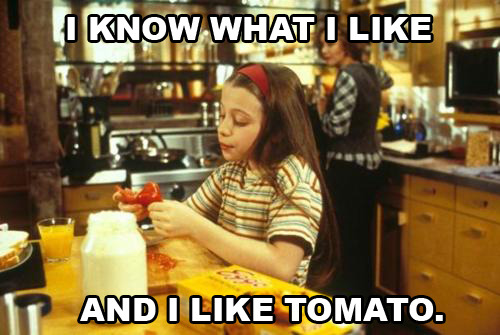
Know What You Like
Harriet eats tomato sandwiches every day. She wears her same weird spy outfit every day, too. And how about the Boy With The Purple Socks? It’s not good to be bullheaded and resistant to change. But if you like tomato sandwiches, you don’t have to switch to egg salad just because people think you should.
Be A Harriet. Be a Janie. Be a Sport.
Harriet broke and entered into homes with a notebook in hand, pretending to be an 11-year-old Mata Hari. Janie set up a science lab in her bedroom, conducting weird experiments and learning everything she could about chemistry and physics. Sport lived with his dad and singlehandedly ran the household – including the finances – while dreaming of becoming a baseball player. Harriet, Janie and Sport all do things.
There’s nothing more annoying – even in adulthood – than people who expect you to be impressed by what they plan to do. You know, the people who talk ad nauseum about how they’ll open a restaurant or write a great book, but don’t take the boring, grueling baby steps to actually get there? People who want to do things aren’t impressive, people who do them are – even if they try and fail. I’m impressed by the people who take those awful boring writing assignments in the hopes that they’ll learn something they can apply later, or the people working the grueling lab job on a hunch that it will put them into contact with the best researchers. Harriet, Janie and Sport were just sixth-graders, but already they were the type of people who did things. They did things that might look weird to other people, simply because it’s what they wanted to do.
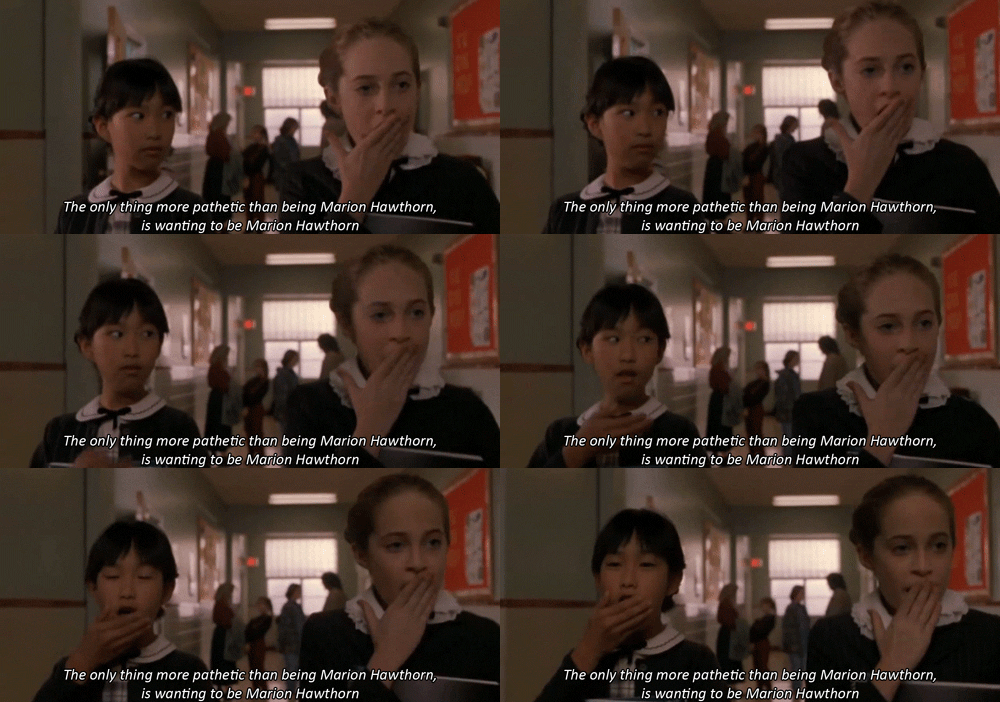
Do NOT Be A Marion Hawthorne. Do Not Be a Rachel Hennessy.
Harriet said “If Marion Hawthorne doesn’t watch out she’s going to grow up into a lady Hitler.” Harsh words, but Marion wanted the entire sixth-grade class to follow her blindly. One blind follower was Rachel Hennessy, who hosts the Spy Catcher Club (and who kids only like because her mom makes good cake). There was a whole pack of kids who followed Marion, and unlike Harriet, Jane, and Sport, they didn’t actually do things – other than try to bring Harriet down.
Change Is Hard
Ugh. Remember how painful it was when Ole Golly left? Even before that happened, Harriet was mighty jealous that her nanny was palling around with the bicycle man. Harriet reacted to these situations like a normal kid would – she pouted and threw a fit. When you grow up, you get a little better at covering it up, but this was one of the most honest parts of the book and a good lesson: change is really hard, and over time your new situation becomes normal to you.
The City Is Your Friend
Harriet The Spy is a distinctly New York City book, but it describes life that’s familiar to any city child. When you grow up in an urban neighborhood, all you have to do is walk out your front door to find all kinds of life to observe. The city itself – the sidewalks, corner stores, and most of all the people – is a character in Harriet’s life.
More broadly, Fitzhugh speaks to finding the fascinating things wherever you are. I thought my city childhood was compelling, and like Harriet I found that the most ordinary-seeming neighbors were extraordinary if I looked closer. Wherever you live as a child or an adult – a big city or a small town or the suburbs in between – there are a million things to notice if you just open your eyes, close your mouth and grab a notebook.
You Might Screw Everything Up And Lose All Your Friends
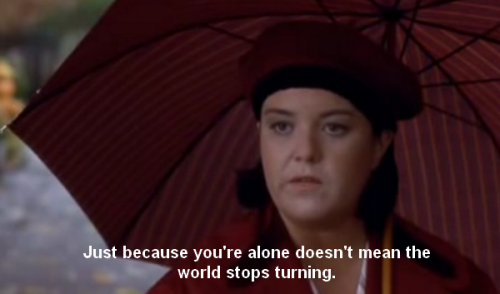
… and you’ll still be okay. This probably doesn’t happen so much when you get older (though it’s still possible), but remember those times in elementary school when you’d do one thing wrong, or have an argument with one friend, and all of a sudden it seemed like everyone was mad at you? When you get older, you can still screw up other things – there’s always something you can ruin, whether it’s a project at work or your tax return. If you give most things enough time, they’ll work out. In the meantime you have to fold up your pride, stick it in your back pocket, and try to make things right – and know that just because things went wrong doesn’t mean the world stops turning.
Growing up in the 1990s, it was sort of normal for a girl to be into the 1800s. The American Girl catalog was in your mailbox, the Little House books were in your Scholastic orders, and everyone had a mom or grandma who was really into Dr. Quinn. The 1994 film adaptation of Little Women was right in the zeitgeist. When I saw that it was on tv around Christmas, nostalgia got the better of me. I had to watch. And, umm… something jumped out at me that didn’t when I was a kid. So, I decided to re-read the book on my bus rides to and from work, and it was confirmed.
Amy March was a huge freaking bitch.
I accepted early on that Amy was my March counterpart. While I loved writing and piano, I was neither a free-spirited tomboy like Jo nor a gentle, shy dead girl like Beth. And Meg — seriously, did anyone ever want to be Meg? Leave a comment if you did. No, I was an Amy. I’m also the youngest of four, and I – like many youngest children – am kind of hammy and want everyone to love me. Like the youngest March sister, I’m even the only one of my siblings to miss out on getting a nickname. Alcott never mentioned it, but I just know that Amy felt like she got the shaft there.
So,while it does pain me to say this, let me repeat: Amy March was a total bitch. Let’s discuss:
Nobody Cares About Your Nose, Amy.
Amy hates her nose, which is described as a small, flat snub nose. Oh, so an adorable nose? A nose that is too cute? What a trial that must be – like those girls who complain about being “too pretty.”
Amy wants a “Roman Nose,” which according to Wikipedia, is “a human nose with a prominent bridge, giving it the appearance of being curved or slightly bent.” Wow, March. Have you ever got shit taste in noses. That’s probably what my nose looks like, and you know how I got it? Not by sleeping with a clothespin on it – no, I broke it. Twice.
Oh, You’re Too Good for Hand-Me-Downs? Can it, Amy.
The hardest thing in Beth’s life was dying of scarlet fever and the hardest thing in Jo’s life was having a dumb-bitch little sister who stole her manuscript, Eurotrip, and Laurie, but Amy — the hardest thing in her life was having a tiny, cute nose and having to wear hand-me-downs.
Alcott writes: “Amy was in a fair way to be spoiled, for everyone petted her, and her small vanities and selfishness were growing nicely. One thing, however, rather quenched the vanities. She had to wear her cousin’s clothes. Now Florence’s mama hadn’t a particle of taste, and Amy suffered deeply at having to wear a red instead of a blue bonnet, unbecoming gowns, and fussy aprons that did not fit. Everything was good, well made, and little worn, but Amy’s artistic eyes were much afflicted, especially this winter, when her school dress was a dull purple with yellow dots and no trimming.”
Look, I had a cousin who was an only child, and her mom shopped at the good stores. The day I’d get the big black trash bag of her hand-me-downs was like a freaking holiday. Oh, Florence’s mama sent you a red bonnet? Well my cousin’s mama sent me skorts and shortalls, and I was happy to have them.
Amy. Limes Are Stupid.
Poor thing. Always thwarted in her search for citrus fruits.
Pickled limes were the fashion at Amy’s school, because apparently she was educated with a bunch of other little dummies. So, Meg gave Amy the rag money to buy some limes, and I’m not even completely clear on what “rag money” is, but I’m pretty sure that if your family is poor enough to rely on something called rag money to supplement your income, safe to say you’re pretty hard up and shouldn’t be wasting your money on preserved citrus fruits.
Limes were outlawed in Amy’s classroom, but obviously all of the kids still brought them in, kind of like tamagochis in my school, circa 1998. [Sidenote: the spell-check suggestion for tamagochis is “masochists,” which is pretty apropos. What were we doing to ourselves? At least when limes are the 6th-grade trend, you don’t have to sneak off to feed it every 3 hours.] But, Amy wouldn’t give this girl Jenny a lime because Jenny was being a total bitch, so Dumb Bitch Jenny told the teacher that Amy had limes. He made Amy throw the limes into the snow and Amy had a fit even though a citrus fruit will do just fine in the snow. As a matter of fact, Amy couldn’t have known this, but in like 70 years they’ll invent this magical box that keeps food cold all of the time and – will wonders never cease – the food lasts longer. Also Amy’s limes are PICKLED, which admittedly is gross, but it means they can stay outside for a minute. [However, the limes do get stolen. We’ll go there later.]
Oh, and then the teacher hit Amy’s hand, which was majorly not cool. Our biggest bitches in this story are really the teacher and Dumb Bitch Jenny. Still, Amy’s a bit at fault for squandering the family’s rag money on some stupid limes.
Amy March Hates Irish People. This Irish Person Says Amy March Can Suck It.
The Republic of Ireland has retaliated by naming its least-appealing souvenir porcelain doll after Amy March.
When Amy’s limes got thrown into the snow, she wasn’t upset because she lost her limes – she was upset because the limes were “exulted over by the little Irish children, who were their sworn foes.” Yep, Amy March’s sworn foes were anonymous Irish street urchins. You bet your sweet bippy that one didn’t make the Winona Ryder movie. It wasn’t losing the limes that made Amy cry like – forgive me – a little bitch, it was the Irish kids getting the limes.
Amy. You live in Boston. Concord, whatever. You know those little Irish street children? They’re going to run your city. In 100 years, the descendants of one of those lime-eating Boston Street Micks is going to be our nation’s president. Your city’s basketball team is literally going to be called the Celtics. Don’t worry about what basketball is. If your grandchildren ever get arrested, you know who’s going to do it? An Irish cop. But you don’t even have to wait 100 years. Even in the 1860s, every one of those Irish kids has a pack of 14 siblings to back them up in a fight. And those kids are scary. They have been working in silk mills since they were 5. You know how my great-great-great grandmother survived the Potato Famine? By eating GRASS. Honestly, poor Irish children from Boston in the 1860s are probably the worst “sworn foes” you could make.
So, on behalf of Irish and part-Irish Americans, let me just tell Amy March that she can suck it. Know what she can’t suck, though? A lime – because the Irish kids got them. Booyah, March.
Ruining the ONE THING Your Sister Loves? Pretty Bitchy.
Remember when Amy was a little piss who burned her sister’s manuscript because Jo dared to have fun without her? God. What is your beef with Jo, Amy? Tell me. Because it’s sort of a recurring theme throughout the book.
On the plus side, I’d like to thank Amy March for the world’s first lesson that you should always, always back up your work.
You’re Using It Wrong, Ames.
I just cannot with this basic girl and her five-cent vocabulary. Honestly, though, Amy is 12 when the book starts, and that’s an 1860s 12. In 1860s Massachusetts, you could be a six-year veteran of the mills at 12. You could be betrothed at 12. But no, Marmee sent Amy to the ol’ schoolhouse instead, probably because of the child’s demonstrated inability to speak the English language. Look, Amy wasn’t spending her time watching tv or instagramming. The only thing to do was read books and learn how to use words properly, yet she was somehow incapable of doing it. For instance: “label” for “libel” (when she actually meant slander) and “vocabilary” for “vocabulary.” You just know this bitch says “liberry” and “pisgetti.”
I’m not saying I’m glad her teacher beat her at school, because I’m not, I’m just saying that if any of the March sisters deserved a formal education, it wasn’t Amy. All I know is, if Amy March lived today, she’d be that little cousin of yours whose tweets and Facebook posts are so incomprehensible that you basically have to do an English-to-English translation every time you read them.
She’s not even that good at art so maybe she should just shut up about it.
Amy March isn’t a real person, but she was somewhat based on Louisa May Alcott’s sister Abigail May. May probably had a lot of gifts and talents, but art wasn’t one of them. Here are some of her drawings:
Compare the scale of Marmee(?) in the chair with the girl to the right. It’s like a Cabbage Patch doll next to a Barbie.
My favorite part is the floating table.
May died young, and that’s sad, but you know what else is sad? These sketches.
I Ain’t Sayin’ She’s A Gold Digger (Yes, I am. Yes, she is.)
So, first Amy gold-digs her way into Fred Vaughn’s heart. Then, she sees the opportunity to get with Laurie, who in addition to being wealthy, also provides her with the opportunity to ruin Jo’s life. So, she does that instead. Either way, she’s a gold-digger.
Steals Jo’s Trip
Eyes on the prize, Li’l Amy. Eyes on the prize.
Jo put up with Aunt March’s Crappy Plumfield Storytime every day, with the understanding that at some point she’d get a Eurotrip out of the deal. Look, for a 20-year-old girl in the 1800s, it wasn’t as easy as just finding a college with a good study abroad program.
Then, Amy – freaking Amy – swoops in, befriends Aunt March, and gets the trip. As an indirect result, Jo had to move to a boarding house and marry an old German man.
Steals Jo’s Man
Jo and Laurie were endgame. I refuse to hear differently. Sure, Jo shot down Laurie’s proposal, but I think it was just the wrong time — she was coming back for him later, and that’s all there is to it.
So, when Laurie proposed to Amy — because she was the next-closest thing to Jo — Amy should have had the decency to know that Laurie was Jo’s one true love.
Instead, Amy was a total bitch, so she married him.
Conclusion
After all that, here’s the truth: now that I’m an adult, Amy is my favorite. Beth does nothing, gets scarlet fever, then dies. [Also, please don’t stone me, but did anyone else think Beth wasn’t exactly playing with a full deck?] Meg does nothing, twists her ankle, then gets married. Jo ruins her chance at true love, and acts so obtuse about how to behave in human society that I think she’s just doing it to get on her sisters’ nerves. She’s like that one girl in college who tried to be unconventional just for the sake of it, and you were always like “you know what? You’re not Amelie. Stop trying to be Amelie.”
Whether or not you think Amy is a huge freaking bitch (and don’t get me wrong, she is), that girl knew how to go after what she wanted. Somehow, she was ridiculously well-liked, but at the same time, you sure as hell didn’t walk all over Amy March. But, if I ever ended up with an Amy March of my own, I would need to make like Marmee and send her to live with a great-aunt for her teenage years – because honestly, what a little bitch.
If you reach into the shadowy recesses of your memory, brush off the cobwebs, and are over the age of 22 or so, you probably remember taking class notes longhand. If so, you are lucky, because there’s a good chance that some of your high school musings have made it into this millennium. Unless you are one of those people who actually backs up all of their work on a flash drive or has had the same computer for a very long time, your electronic files probably haven’t survived so long.
I recently came across a notebook I kept in high school English. I was preparing for the AP Lit exam, and made a list of books I’d read that I could discuss in the essays. In brackets, I wrote a short summary (maybe 5-10 words) to jog my memory of the book. I can’t help but think that these would make excellent alternate titles.
I got a 5 on that AP, making this the best study method ever.
Here are some of my favorites:
The Great Gatsby: [Good Parties and Car Crashes]
The Portrait Of The Artist As A Young Man: [Run-On Sentences That Don’t Make Sense (Irish)]
The Once And Future King: [Probably Interesting If You’re Into D&D]
The Catcher In The Rye: [Whiney Bitch Gets Kicked Out Of School]
The Bell Jar: [Mad Electroshock]
Something Wicked This Way Comes: [Watched The Movie Instead]
The Crucible: [I Saw Goody __ With The Devil! (POPPETS)]
Great Expectations: [Cobwebbed Wedding Cake & Unrequited Love]
Wuthering Heights: [Moors (Geographic)]
Othello: [Moors (Ethnic)]
The Scarlet Letter: [Mores (Social)]
Death Of A Salesman: [Salesman Totally Dies]
One Day In The Life of Ivan Denisovich: [Reading It Felt Like 10 Years In The Life Of Me]








 Cookies + Sangria