Study Abroad: A Lesson in Jumping In

In the spring of 2006, I went through the rite of passage that many college students go through, which was to study abroad. The college I went to had an especially unique one in the Netherlands located about two hours southeast from Amsterdam in a small town called Well. In my head, I pictured it to be all Stars Hollow-like, since there was one main street, where the bakery, grocery store, restaurant/bar, and school were all on the same stretch of road, and only about 2,500 residents. Why Well? WELL, it’s because it’s where our European campus was located. See below:

Yes, that’s a castle. Yes, that’s a moat. Not pictured: a second outer moat. Welcome to Kasteel Well – the 14th century castle where approximately 75 to 80 students called home for about four months. This is where we slept, ate, and even took classes, which were mostly taught by European professors. We took said classes Monday through Thursday, and Friday through Sunday were designated as travel days. Throughout my time there, I went to 12 different countries (including Spain to visit Molly where she was studying at the same time!) and was lucky enough to see all these places and landmarks I may never see again in my lifetime.

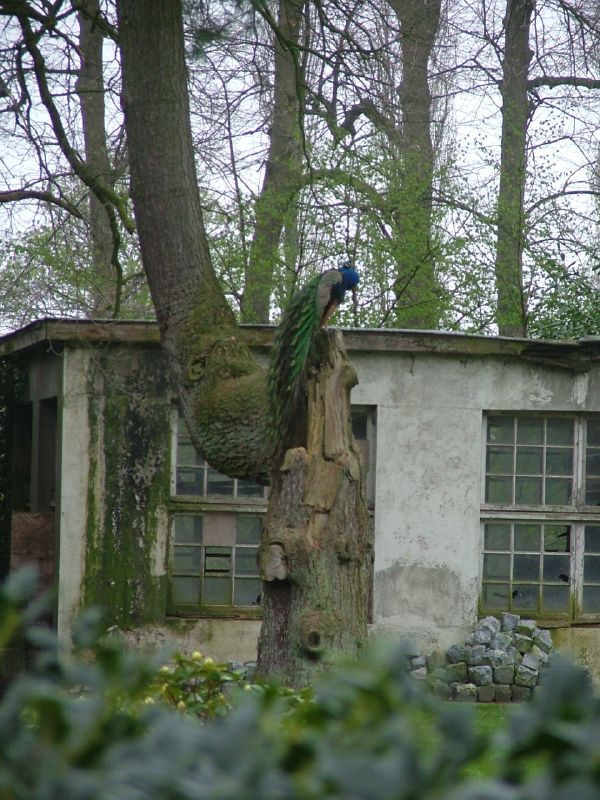
In full disclosure, I could talk all day about my time at the Castle, but I’ll try to keep it at a minimum for this post. Looking back on that experience, it almost seems surreal. I mean how fortunate and crazy were we as 20 year olds to roam around Europe on our own and discover cultures and lands much different than we were used to? Not to mention the whole living in a castle factor, which already seems like a made up thing. Peacocks! Did I mention we had pet peacocks!?
Castle

Going into that semester, I didn’t really know anyone going. I mean I had a couple acquaintances going but some people were going with their best friends. This terrified me. I dug up my LiveJournal (yes, ‘dug up’, and yes, my LiveJournal) entry from a couple days before I left for the Netherlands. And because we’re friends now, I’m going to share that entry from 19-year-old Traci with you:

08:32 pm 1/11/06

jump in
I leave for the netherlands in approximately 46 hours …
i do this thing where i put off thinking about something big that’s going to happen in my life because i don’t want to face reality if i don’t think i can handle it.
i’m excited about getting to see new places and new people, new cultures. but it still worries me that i won’t make friends in the process. you can tell me over and over again that i’m going to have a great time and that i will make friends, but i’m just so scared about it. when i look at the people going to the castle, all i see is cliques and groups of friends, and me trying to fit in and be a part of theirs.
i’m scared of living in europe for 3 and a half months, and not having anyone to travel with. i’m just scared overall.
but of course i’m not thinking about it.

You know how people ask, ‘what would you tell your younger self?’ My answer to that in this particular situation is… nothing. I wouldn’t say anything. I needed that sense of fright in me. I think I would be more worried if I WASN’T scared of leaving everything I knew to be familiar for 4 months and diving into a foreign country with no one I knew.

I can’t pinpoint an exact moment in that semester when it happened, but the day I returned to the States, April 27th, 2006, I felt something was different within me. Maybe it’s that I had to quickly learn how to go into the world and fend for myself. Maybe it’s that I was able to come across so many people from different walks of life and realized that there is so much more than the bubble we live in each day. Maybe it’s the unexpected (lifelong) friendships I made with people that share that magical time in our lives together. Maybe it was the reverse culture shock – it is REAL y’all. If you’ve never experienced it, it’s nearly impossible to explain. I remember having a particularly hard time coming back to my friends in Boston. All I knew was that I was so so so happy to see them and be in their presence once again, but I didn’t feel like the same person they were friends with 4 months ago. Whatever it was, I knew I was forever changed because of it.

So here we are, eight years later and to this day, deciding to go to the Castle is one of (if not the biggest) game-changers in my life. I can honestly say I’m not sure I would be living the life I had now if I didn’t go the Castle. To mark that day we came back from a semester of living worldly lives, our core group of castle girls decided to celebrate our ‘Castleversary’ each year. I believe the first anniversary involved a sleep over, temp tatts, and painting picture frames (because we had since become mature adults). Now that four out of the six of us live in LA, we’ve been celebrating our own Castleversary with mini-adventures in the city – which just happens to be this weekend.

While we ‘hit the town’ and celebrate our general eternal love for each other, I am reminded of the countless memories we made all over Europe, the late-night train rides, the getting lost and not really being worried about it, the meeting of strangers who would seem like old friends, and how the fear I had going into the whole experience was completely warranted. What’s that quote? “Everything you want is on the other side of fear.” Studying abroad is not something you go into with complete confidence. It’s daunting and unfamiliar, but in the end it’s all worth it. Whether you’re thinking about doing a similar program in college or if you’re a grown ass person who is stuck in a rut, the same message rings true for all – what are you waiting for? Be excited. Be scared. Jump in.

“For if every true love affair can feel like a journey to a foreign country, where you can’t quite speak the language, and you don’t know where you’re going, and you’re pulled ever deeper into the inviting darkness, every trip to a foreign country can be a love affair, where you’re left puzzling over who you are and whom you’ve fallen in love with. All the great travel books are love stories, by some reckoning — from the Odyssey and the Aeneid to the Divine Comedy and the New Testament — and all good trips are, like love, about being carried out of yourself and deposited in the midst of terror and wonder.”

Pico Iyer, “Why We Travel

How To Survive Life With A Host Family

Studying abroad is a whole lot of exciting mixed with a little bit of absolutely terrifying. This is never more true than when you’re living with a host family. Living in another country- even one that doesn’t use your primary language? Fine! Studying through a new college where you don’t know anybody? Okay! But living with a new family? YIKES. Even living with an American family would be tough in college. Besides,  everyone else I knew who studied abroad got to stay in dorms or student apartments.

I am by no means an expert on the homestay, but I spent almost 5 months with a family in a Madrid apartment and another month in a village in Nicaragua, so I know a little. In Nicaragua I had a sweet host mother and great roommates, and in Spain I had a prickly host family and one roommate I don’t even like reliving over a decade later. In both cases, it was this weird in-between status where you really weren’t part of a family, but you weren’t exactly just renting a room either. Sometimes it was hard, so here are a few tips from someone who has been there.

 Chat with your family a lot:

Homestays are great for language practice but doesn’t always make for easy, casual, fun interactions. The plus is that these situations give you a lot of bang for your study-abroad buck, and your language skills will improve in a way they never would if you lived with American kids. After a while tense changes and figures of speech become almost effortless – all that stuff you can’t REALLY learn in a classroom.

In my second language, sometimes I was like this weird alien who spoke the language just slightly wrong. But what do aliens do? Well, according to Unsolved Mysteries, some weird stuff. But they get to their host planet (or family), they observe, and they try to make sense of what they see.

Plus, you will learn a lot about another culture when you talk with your  family- how they think, what they value. You will find things to like and dislike, and you will probably hear some negative opinions about your home country. You might find yourself questioning things you hadn’t before, even little things – why am I asking for fake sugar for my coffee if I’m not diabetic? And if nothing else, it is a chance to learn a lot about the people in your fake family – and people, as a whole, are so, so interesting.

If, say, your family doesn’t seem particularly friendly, then having these convos can (1) help them realize you’re making an effort, or at least (2) give you this kind of anthropological motive so that even when they aren’t being that nice to you, you can narrate the encounters like a National Geographic special in your head.

But, take space where you need it:

Even with my real family, a lot of times I need to get away. Like, when you came home in high school, what would you do? At some point, no matter how much you loved your family and how many tv shows were on your common schedule, you would go to your room and shut the door. If you need some alone time to do homework, read, or write letters, close your door. It will make you a more sane and happy person, and thus better to live with. I had a roommate (… another story) who told me I was being rude because I was in the bedroom reading when she was at the table talking to our “brothers” one day, but I knew I needed take an hour to recharge after a particularly long day. It’s fine. One of the things that you learn living with a host family is that people everywhere have a lot of things in common. Your family will get it, and they won’t think they’re being rude. The homework excuse is good if they press you on it.

Know the rules:

Hopefully if there are any hard-and-fast rules, your family will let you know in advance. However, some things are so culturally ingrained that they might just take them for granted. This is where your awesome alien skills come into play. Try really hard to observe what people around you are doing so that you don’t get it wrong. One day, I came to the breakfast table and said something to my madre about the weather (or something. It was innocuous and I can’t really remember). She was NOT happy. I guess in Spain, if you see someone (even someone you live with), you always greet them with Good Morning first. Yeah, I… did not know that. And then, I did: feedback, not failure. Also, be prepared for something embarrassing to happen, if you’re an embarrassing person. You might get a stomach flu and puke everywhere, or come home having had too much to drink one day, or tell your host mom that you’re “so pregnant” instead of “so embarrassed”. I know people who have survived all of those experiences, so I promise that even if you slip up, you’ll be fine.

Explore the neighborhood:

You have the advantage of being integrated in a real, working neighborhood. This is amazing! Make sure you walk around your area in your first days and weeks and get to know where the useful things are – maybe ask one of your hosts for a walking tour, if you are so inclined. Over time, you will get to know your neighbors – the unhappy ice cream lady (Nicaragua), the adorable kids in preschool smocks (Spain), and so on. That gives you even more chances to learn about the culture and to practice the language, if applicable.

 Chances are your family is fairly hands-off (my Spain family was, anyway), so you will not have much guidance from them. Plus,  you won’t have the input of school staff like other study-abroaders, since they likely won’t live near you and know your neighborhood. There is a silver lining to this. You will find that people are more likely to treat you like any other local when you’re the only non-native college student in the area, compared to if a pack of you descend all at once speaking English. At the very least, know where your nearest post office, library, pharmacy, hospital, grocery store, and department store is. You know, all that Mister Rogers stuff. This was particularly useful in Nicaragua where the streets were made of dirt and unnamed – if someone tells you that the farmacia is two blocks over from the iglesia, on the corner next to the guy who owns the really huge pig, you better know where that is!

Going back up to the tip about taking space: if your home is small or if there’s no place to get away, you can make the most of your time at home by leaving to take walks and explore the neighborhood. You get exercise, learn about your neighborhood and get some time away from your family. I honestly took a walk just about every day in Spain just to get away.

Get a phone:

Hard to believe, but in both of my host houses, I didn’t have internet access. And I was okay, really! But it’s probably a good idea to get a phone if yours doesn’t travel well internationally. In Spain, I went with one where you pay by the minute, which is good if you won’t be around for a long-term contract and are trying to negotiate a cell phone store while jet-lagged and in your second language. In Nicaragua, I just didn’t talk to my real family, which was fine because it was only a month. Any longer, though, and you should really get one. This goes for students who are staying in dorms, too.

Ask if you can help:

Laundry with my Nica-roomies and our beautiful mom-away-from-mom, Sonia. My Spain mom was named Lidia, but both of my host fathers were named Alberto; maybe yours will be, too.

Since you are paying to stay with a family, there may be some very definite rules about whether or not they can put you to work. Try, anyway. You might be able to learn a new skill, something that you’d never have learned staying in your country or living with other people from your homeland. At the very least, they will probably let you learn how to make a favorite dish if you ask really nice and compliment it. Thanks to that tactic, I make a mean tortilla espanola. In Nicaragua, I learned how to smash open a coconut (not easy!) and wash my clothes without a washer and dryer (even harder!). Little things like that, believe it or not, make the whole homestay experience worth it.

 Kill the green-eyed monster:

Unless you have a super-amazing host family, in a fabulous house or apartment, in the best city ever, you might be a little jealous of your friends who are back home having the real, normal college experience. Or, your friends who are staying at a dorm in London while you are in an old lady’s apartment in Adalucia. This was very true in Spain, where, in my experience, you weren’t so much part of a FAMILY. It was a weird cross between being a boarder and being a visiting cousin or something, and sometimes it could be uncomfortable. It’s fine to have these feelings, but acknowledge them and then let them pass. Yes, those friends of yours back home or in dorms are having more of the typical “college experience” than you, and you chose to give that up for a semester, or a year. You gave things like chatting after dinner, and speaking English, probably, and hanging out in a big group at all hours, and running through what happened last night at Sunday breakfast. But you got some other great things in return.

Listen. I’m not writing this because staying with a host family is THE way to go and I want everybody to know how awesome it is – I’m writing it because it’s hard sometimes, and this is the advice that would have helped me. However, big rewards come when you do hard things. By the end of the semester, and certainly years down the line, I can almost guarantee that it will have been worth the trouble – so don’t be too jealous. You will have had 6 or 7 semesters of regular college compared to your 1 or 2 abroad – you are not missing out. Really.

Get an activity:

This actually goes if you’re doing a more traditional study abroad experience, too. Find a way to interact with your new community outside of whatever courses you take at your university. Temporarily join a church, if you’re into that. Volunteer. In Spain I volunteered with Girl Scouts; Nicaragua was a bit different because the whole point in going was to teach, translate, and work at a camp. Take classes. I took flamenco class in Madrid, because  where better to learn flamenco than Spain? Maybe cooking classes or music lessons appeal to you Join a recreational soccer league. Get out there and do something!

If your host family is not great — sometimes people find this post searching on things like “my host family hates me,” and I don’t mean to minimize that — this is also a way to get the heck out of there and meet other people. You just might find that your unfriendly host family isn’t typical of the country as a whole, which can make your study abroad experience a lot more pleasant.

Accentuate the positive:

Like I’ve said, there are some down sides to the homestay experience. Remember, if your family is awful, they don’t necessarily represent the whole country.  If you’re having a tough time, make a list of the things that you actually do like. If you don’t even have much that you like, make a list of the things that you’re learning instead. Make a paper chain until you can go home, like you’re a child awaiting Christmas. Until you board that plane, though, try to take advantage of this situation as much as you can. I know it can be difficult, but it can also be really amazing. One of the hardest things when I came home was people asking “how did you like it?” Well, it was five months of life. You don’t just like or not like almost half of a year.  You live it – and I can almost promise that you’ll be glad that you did.

The One With The Cheese Plate

In my educational life, I have taken a total of 6 years studying Spanish. One would think I’d be pretty close to fluent after all those classes. Despite the fact that I got a 2 (out of 5) on the AP test, I’d like to think that I can carry on a decent conversation from those years of espanol. However, there was a reason I got such a low score on the AP – not just because our teacher didn’t prepare us for the actual test – and it was never more apparent than when we took a trip to Barcelona, Spain during my semester abroad in the Netherlands.

I was looking forward to being back to Spain again, after having gone on a multiple city tour back in high school. My Spanish was obviously much better back then. However, in Barcelona, they speak a different dialect, which is similar to regular Spanish, but different enough that a stupid American like me would not understand it.

One of the main reasons we went to Barcelona was to attend a Death Cab for Cutie concert. We were super excited because here we were, halfway around the world, and we would be jamming to American music stars playing in a foreign city! Singing and speaking in a language we know! So before the concert, we decided to get dinner near the venue. Of course the best way to find a restaurant when travelling is to walk around, look at the menu, see if there are any recognizable items on there that you’re willing to eat, then go for it. We settled on a small restaurant that had stuff like sandwiches and salads and french fries, but all were Spain-isized. Our waiter just happened to be Filipino, so I knew we were in the right place. He called me out, and tried speaking Tagalog to me, but I could only respond in English. My Tagalog is like ::this much:: better than my Spanish. Plus he also spoke a different Filipino dialect so twice the fun. Either way, there was definitely something lost in translation – English, Spanish, Catalan, Cebuano – all these languages together were a recipe for disaster.

The girls all got things that were semi familiar, but I wanted to be adventurous! Take the road less travelled! Get something different! Look, an empanada! I know what those are! Filipinos make these! They’re delicious and have meat and potatoes and cheese in them! I’ve totes had those before and loved them! I’ll get that!

Finally, the food was put in front of me and the use of exclamation points were vanquished. He literally gave me a basket of bread and a plate of about 10 slices of thinly cut cheese.

TO CLARIFY, I ORDERED WHAT I THOUGHT WERE GOING TO BE THESE:

BUT ENDED UP WITH THIS:

To say I was disappointed would be an understatement. I was confused, bewildered, and most importantly, still hungry for empanadas. But because my friends are awesome, they shared some of their food with me. See: one slice of bacon in middle of cheese plate. Also see: Jennie’s face of ‘you’re an idiot.’ Needless to say, even with the mishap, I still finished the bread and the cheese (because I’m not stupid), and left for the concert fairly full but with a hilarious story to tell. Just goes to show that there will be times in your life when you think you’re getting empanadas, and instead, life hands you a cheese plate. But you gotta eat the food you’re given. And that will make all the difference.